Quasimorph Enemy Database and Bestiary
Every enemy type, resistance profile, and examine tactic in one reference
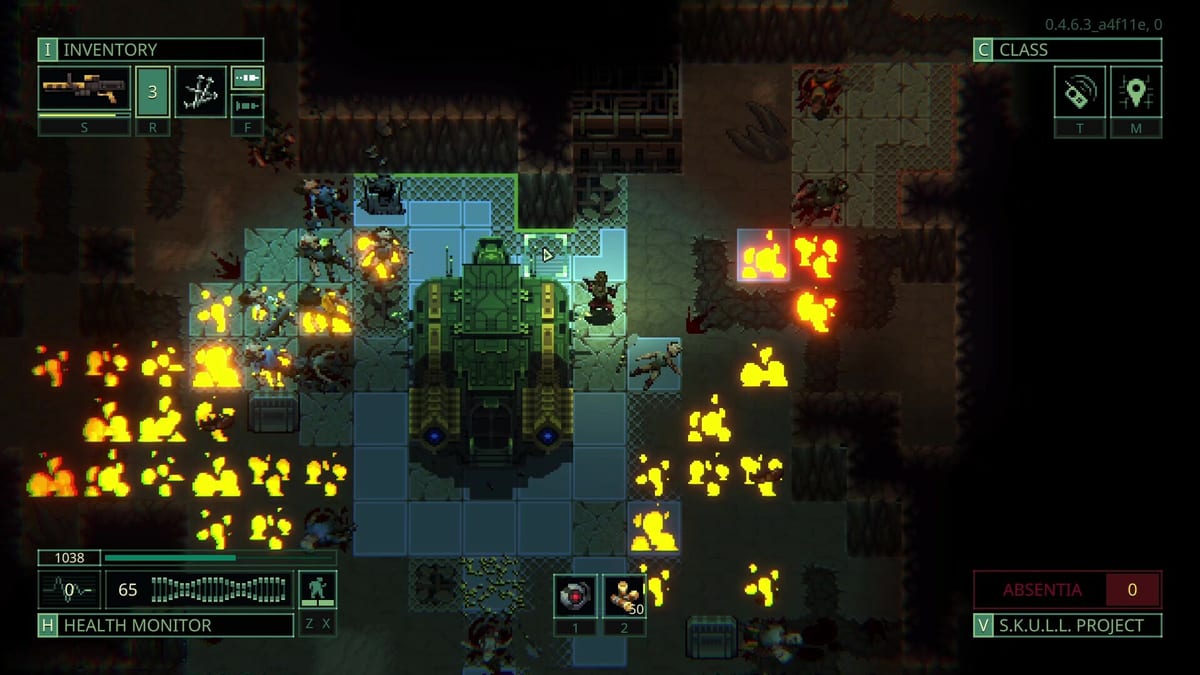
Quasimorph throws diverse enemy types at every extraction run. Robots, human factions, horror entities, and elite variants each demand different weapons, stances, and loadout adjustments. The examine system reveals resistance data during missions, but having baseline knowledge before deployment lets you pre-plan dual-type kits instead of scrambling mid-floor. Magnum Scriptum’s 1.0 on July 31, 2026 expanded enemy pools with faction tech scaling and added new elite variants tied to the five major storylines.
This database covers every enemy family, their resistance patterns, typical loadouts, and counter strategies. Pair this with Armor and Resistances for the damage-type math and Weapons for weapon pairing.
How examine works in combat
Right-click any enemy during your turn to open the examine panel. You see current HP, wounds, equipped armor pieces, pain status, and resistance percentages by damage type. Examine costs one action point and the information is worth far more than a wasted shot into the wrong armor type.
When to examine:
- First contact with any enemy type you have not seen on that mission
- Before engaging elite variants or renamed units
- After eccolapse reshapes patrol composition
- When floor composition surprises you mid-run
What examine tells you:
- Which damage types the target resists heavily (above 100%)
- Which types the target is weak to (negative percentages)
- Armor coverage and weak points
- Current wounds and pain level
- Equipment tier indicating faction tech level
Robot enemies
Robots form the backbone of station security across most factions. They resist pierce, blunt, and fire while remaining weak to cut damage. This makes shotguns and machetes the default counter, though some elite robots add armor plating that requires burst approaches before swapping to cut finishers.
Standard robot variants:
- Patrol drone — Light armor, low HP, weak to cut. Common on early Mars and Phobos sectors. One shotgun blast often suffices.
- Security bot — Medium armor, moderate HP. Rifle-level cut weapons or sustained fire from SMGs work. Examine reveals if armor has degraded.
- Heavy mech — High armor and HP, often resists multiple types. Bring explosives or sustained cut damage. Do not engage with single pierce loadouts.
- Sentry turret — Stationary or limited movement, high accuracy. Target from cover or use explosives. Examine before closing distance.
- Maintenance unit — Low threat but often blocks doorways. Cut weapons or just move around when safe.
Robot weak points:
Most robots have joint armor gaps that take increased damage. Striking exposed servos, sensor arrays, or weapon mounts deals bonus damage. The examine panel highlights these zones indirectly when armor coverage shows gaps.
Human faction enemies
Human enemies wear faction-appropriate armor and carry weapons matching their role. Unlike robots, humans often have mixed resistance profiles and respond to pain, wounds, and morale.
Civil Resistance fighters
Guerrilla operatives favoring improvised armor and close-quarters weapons. Often weak to pierce at range but dangerous in melee. Examine their equipment before committing to door fights.
AnCom Syndicate members
Black market operators with varied loadouts. They carry mixed damage weapons and sometimes exotic ammunition. AnCom elites use cover tactically and retreat when wounded.
RealWare Industrial Security
Heavy corporate guards with professional equipment. RealWare teams field high-tier armor and coordinated fire patterns. Their weapons span multiple damage types, requiring examine before every engagement on RealWare maps.
Tezctlan Revivalist Cells
Disciplined fighters with cultural aesthetic gear. Tezctlan units often include both ranged and melee specialists. Their armor profiles vary widely; examine every new variant.
SBN Security Teams
Corporate infrastructure guards appearing across multiple station types. SBN tech scales early to mid campaign. Their equipment is consistent but their coordination makes them dangerous in groups.
Dilthey Research Personnel
Lab workers and security mix. Dilthey-affiliated maps often combine human guards with experimental hazards. Some carry biotech weapons that deal infection damage.
Quasimorphosis horror entities
Beyond faction enemies, some stations host entities tied to the Quasimorphosis meter. These enemies appear more frequently as the horror level rises and during Rapture events.
Baron
The signature horror entity of Quasimorph Rapture events. The Baron is a high-threat humanoid figure that appears at peak Quasimorphosis values. It has high armor, multiple damage resistances, and abilities that punish prolonged engagement. The standard counter is evasion and extraction — do not try to kill the Baron unless your loadout is specifically built for the encounter. Examine shows resistance profiles but the Baron’s stats exceed standard elite scaling.
Shambler variants
Slow-moving horror entities that accumulate from eccolapse pressure. They resist blunt and pierce while remaining vulnerable to cut. Shamblers are dangerous in groups and excel at blocking corridors during eccolapse.
Whisper entities
Fast, fragile horror units that appear during high Quasimorphosis. They deal precision damage and apply disorientation effects. Cut weapons or rapid-fire guns handle Whisper entities before they close distance.
Bramfaturas event enemies
Bramfaturas layer additional horror events on non-Absentia stations beyond standard Quasimorphosis. These enemies appear during Bramfaturas triggers and mix with regular patrol tables. Examine new Bramfaturas variants immediately — they often have unusual resistance profiles.
Elite and renamed variants
Elite enemies appear on higher-skull contracts and after faction tech upgrades. They carry improved equipment, higher stats, and sometimes unique abilities.
Elite identification:
- Named prefixes like Veteran, Commander, or specialized titles
- Improved armor appearance and weapon tier
- Higher base HP and stat pools
- Modified resistance profiles compared to standard variants
Counter strategy for elites:
- Examine immediately on contact
- Identify primary damage type weakness
- Switch weapons if current loadout is ineffective
- Consider retreat if loadout cannot counter their profile
- Call for backup from squad if the mission structure supports it
Damage type counters by enemy family
| Enemy family | Weak to | Resists | Counter weapons |
|---|---|---|---|
| Patrol drones | Cut | Pierce, blunt, fire | Shotguns, machetes |
| Security bots | Cut | Pierce, blunt, fire | Shotguns, SMGs with cut ammo |
| Heavy mechs | Cut, explosives | Most ranged | Shotguns + explosives |
| Civil Resistance | Pierce, cut | Variable | Rifles, shotguns |
| AnCom Syndicate | Mixed; examine | Mixed; examine | Flexible loadout |
| RealWare Security | Cut, blunt | Pierce sometimes | Shotguns, hammers |
| Tezctlan Cells | Variable; examine | Variable; examine | Pre-plan dual types |
| SBN Teams | Cut | Pierce | Shotguns, machetes |
| Baron | Cut, explosives | Most standard | Evasion priority |
| Shamblers | Cut | Pierce, blunt | Shotguns, melee cut |
| Whisper entities | Cut, pierce | Blunt | Rapid-fire or blades |
Always verify with examine — elite variants and faction tech scaling create outliers.
Examine-first combat protocol
Establish this habit for every new enemy contact:
- Enter Sneak stance near the door.
- Right-click to examine before any attack.
- Read resistance panel and identify weak damage type.
- Swap weapons if current primary does not match.
- Engage with appropriate damage type.
- Re-examine if the enemy shows unexpected durability.
This protocol adds one turn per first contact but prevents wasted ammo, reduces clone deaths, and keeps AP budgets predictable. The time cost recovers quickly in reduced failure rates.
Version 1.0 enemy additions
The July 31, 2026 launch expanded enemy pools significantly:
Faction tech scaling — Enemy equipment tiers now scale with galaxy map progress. Early Mars missions feel different from late-campaign outer-system deployments.
New elite variants — Each major storyline added faction-specific elite types that appear on story-critical missions. Examine these carefully — some have resistance profiles not seen in standard patrol tables.
Composite damage enemies — Version 1.0 introduced two new composite damage types. Some elite enemies resist these composite profiles, requiring adapted loadouts.
Bramfaturas integration — Horror events now layer with faction patrol tables more tightly. Expect mixed encounters on Quasimorphosis-capable stations during Bramfaturas triggers.
Practical loadout planning
Before any mission, ask:
- What faction controls the destination?
- What is the likely robot-to-human ratio?
- Is this a horror-capable station?
- What is the skull rating and implied elite frequency?
A baseline extraction kit carries:
- One primary weapon with cut damage (shotgun or rifle with cut ammo)
- One secondary weapon with pierce or blunt (for human targets)
- One melee weapon with series-of-hits for door peeking
- Medkits, bandages, and sorbets per Crafting
Adjust ratios based on mission intel from Mission Types and faction data from Factions.
Examine saves runs. Pre-plan saves clones. Combine both for consistent extractions.
Frequently Asked Questions
Quick answers to the most common questions.
What damage type are robots weak to in Quasimorph?
Most robots are weak to cut damage from shotguns and machetes. They resist pierce, blunt, and fire damage types.
How do I deal with the Baron in Quasimorph?
The Baron is a high-threat Rapture entity with multiple resistances. Evasion and extraction are the standard responses — do not try to kill it unless your loadout is purpose-built for the encounter.
Should I examine every enemy in Quasimorph?
Examine first contact with any enemy type you have not seen on that mission, before engaging elite variants, and whenever floor composition surprises you. The one-action cost prevents wasted ammo and clone deaths.
What are Bramfaturas enemies in Quasimorph?
Bramfaturas are horror event enemies that layer on non-Absentia stations beyond standard Quasimorphosis. They mix with regular patrol tables and often have unusual resistance profiles.
How does faction tech scaling affect enemies in 1.0?
Enemy equipment tiers scale with galaxy map progress in version 1.0. Early Mars missions differ from late-campaign outer-system deployments in armor quality and resistance profiles.
What is the best general counter for human faction enemies?
Human enemies have mixed resistance profiles that vary by faction and role. Always examine first contact and carry dual damage types. Cut weapons handle most armored humans; pierce works for unarmored targets.