Quasimorph Bestiary
In-game enemy data — every robot, faction unit, and horror entity in one reference
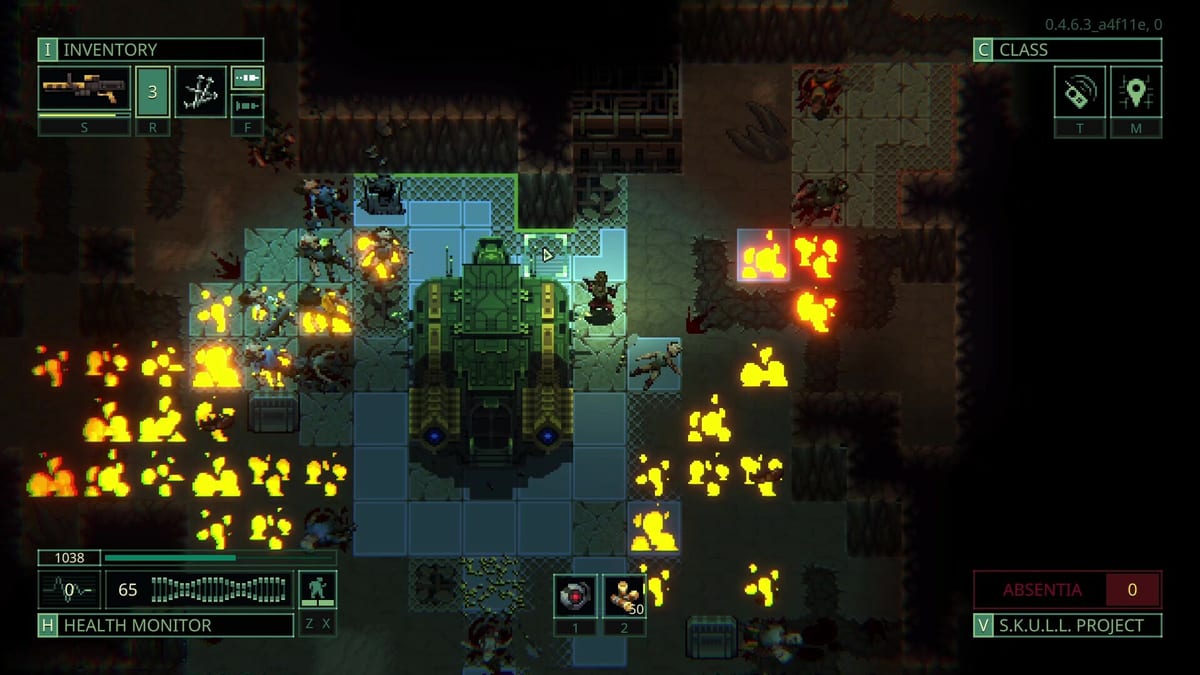
Quasimorph’s in-game Bestiary arrived with the Q4 2026 quality-of-life update, consolidating enemy examine data directly inside the client. Previously, players relied on community wikis or mental notes to recall resistance profiles, weak points, and behavior patterns. The Bestiary now stores that knowledge on-demand during missions, reducing spreadsheet dependency and helping players make faster loadout decisions mid-run.
This guide explains how the Bestiary works, what it contains, and how to use examine data alongside it for consistent extractions.
How the Bestiary works
Open the Bestiary from the Magnum ship menu or mission pause screen. The Bestiary populates entries as you encounter and examine enemies — it is not a pre-filled encyclopedia at launch. Each entry records:
- Enemy name and family — robot, human faction, or horror entity
- Resistance profile — percentage by damage type (cut, pierce, blunt, fire, composite)
- Weak points — armor gaps and vulnerable body regions
- Behavior notes — patrol patterns, aggression, and special abilities
- Location data — which stations and mission types the enemy appears on
Bestiary entries unlock progressively. Enemies you examine in missions get added to your Bestiary with full data. Enemies you never encounter remain undiscovered. This design rewards exploration and gives the Bestiary a natural progression feel.
Using Bestiary with examine
The Bestiary does not replace the in-mission examine action — it complements it. During combat, right-click still reveals the target’s current HP, wounds, equipped armor, and real-time resistance values. The Bestiary gives you pre-flight knowledge before you commit to a mission.
Best practice workflow:
- Before launching a contract, open the Bestiary and review enemies expected on that station type
- Note which damage types the dominant enemy family resists
- Pack at least two damage types matching the mission profile
- In mission, use examine on first contact to confirm current HP and any elite modifiers
- Cross-reference the Bestiary if the enemy’s behavior surprises you mid-floor
This workflow reduces the “wasted ammo” problem that plagued single-damage-type loadouts in Early Access.
Robot families
Robots form the backbone of station security across all factions. They share a common resistance profile: high resistance to pierce, blunt, and fire; weakness to cut damage.
Patrol drones — Light armor, low HP, common on early Mars and Phobos sectors. One shotgun blast often suffices. Bestiary notes their sensor range and preferred patrol routes.
Security bots — Medium armor, moderate HP. Appear on mid-campaign stations. Bestiary tracks their faction-specific weapon loadouts, which can vary between SBN, Dilthey, and RealWare security variants.
Heavy mechs — High armor and HP. Require sustained cut damage or explosives. Bestiary records their joint armor gaps as weak points.
Sentry turrets — Stationary or limited movement, high accuracy. Bestiary documents their field of view and optimal flanking angles.
Maintenance units — Low threat but often block doorways. Bestiary notes their patrol loops for players who want to avoid rather than fight.
Human faction enemies
Human enemies wear faction-appropriate armor and carry weapons matching their role. Their mixed resistance profiles make examine essential on first contact.
Civil Resistance fighters — Guerrilla operatives favoring improvised armor and close-quarters weapons. Weak to pierce at range but dangerous in melee.
AnCom Syndicate members — Black market operators with varied loadouts. They carry mixed damage weapons and sometimes exotic ammunition. AnCom elites use cover tactically.
RealWare Industrial Security — Heavy corporate guards with professional equipment. RealWare teams field high-tier armor and coordinated fire patterns.
Tezctlan Revivalist Cells — Disciplined fighters with cultural aesthetic gear. Tezctlan units often include both ranged and melee specialists.
SBN Security Teams — Corporate infrastructure guards appearing across multiple station types. SBN tech scales early to mid campaign.
Dilthey Research Personnel — Lab workers and security mix. Some carry biotech weapons that deal infection damage.
Quasimorphosis horror entities
Horror entities appear more frequently as the Quasimorphosis meter rises and during Rapture events. The Bestiary records their behavior triggers alongside resistance data.
Baron — Signature horror entity of Quasimorph Rapture events. High armor, multiple damage resistances, and abilities that punish prolonged engagement. Bestiary documents the evasion-first strategy and notes that the Baron’s stats exceed standard elite scaling.
Shambler variants — Slow-moving horror entities that accumulate from eccolapse pressure. They resist blunt and pierce while remaining vulnerable to cut. Dangerous in groups.
Whisper entities — Fast, fragile horror units that appear during high Quasimorphosis. They deal precision damage and apply disorientation effects.
Bramfaturas event enemies — Horror event enemies that layer on non-Absentia stations. Bestiary records their unusual resistance profiles and trigger conditions.
Elite and renamed variants
Elite enemies appear on higher-skull contracts and after faction tech upgrades. The Bestiary tracks their stat modifications compared to standard variants.
Elite identification:
- Named prefixes like Veteran, Commander, or specialized titles
- Improved armor appearance and weapon tier
- Higher base HP and modified resistance profiles
Bestiary counter protocol for elites:
- Open Bestiary and review the elite variant before accepting high-skull contracts
- Identify the primary damage type weakness
- Pre-plan dual-weapon loadout matching the weakness
- In mission, examine on contact to confirm current wounds and armor state
- Consider retreat if loadout cannot counter the elite profile
Version 1.0 enemy additions recap
The July 31, 2026 launch expanded enemy pools significantly. The Bestiary now formally documents these additions:
Faction tech scaling — Enemy equipment tiers scale with galaxy map progress. Early Mars missions feel different from late-campaign outer-system deployments.
New elite variants — Each major storyline added faction-specific elite types on story-critical missions.
Composite damage enemies — Version 1.0 introduced two new composite damage types. Some elite enemies resist these profiles.
Bramfaturas integration — Horror events now layer with faction patrol tables more tightly.
Relationship to the roadmap
The Bestiary is the headline feature of the Q4 2026 quality-of-life update from Magnum Scriptum. It fulfills the most-requested community feature since launch: consolidated enemy data inside the game client rather than sourced from external wikis.
Pair the Bestiary with this wiki’s Enemy Database for cross-reference, especially for enemies you have not yet added to your personal Bestiary. The wiki’s database remains authoritative for unverified data and community-reported edge cases.
What to read next
| Focus | Page |
|---|---|
| Full enemy reference | Enemy Database |
| Combat stances | Combat Stances |
| Armor and resistances | Armor and Resistances |
| Weapons | Weapons |
| Midgame combat | Midgame Combat |
| Quasimorphosis | Quasimorphosis |
| Post-launch roadmap | Roadmap |
Use the Bestiary during missions, use this wiki before them. Together they cover every enemy in Quasimorph.
Frequently Asked Questions
Quick answers to the most common questions.
How does the Quasimorph Bestiary work?
The Bestiary is an in-game enemy encyclopedia that populates as you examine enemies in missions. It records resistance profiles, weak points, behavior notes, and location data for each enemy family you encounter.
Is the Bestiary pre-filled at launch?
No. Bestiary entries unlock progressively as you encounter and examine enemies during missions. Enemies you never face remain undiscovered in your Bestiary.
Does the Bestiary replace in-mission examine?
No. The Bestiary gives pre-flight knowledge before missions; examine gives real-time data on an enemy's current HP, wounds, and elite modifiers during combat. Use both together.
What enemy types does the Bestiary cover?
Robots (patrol drones, security bots, heavy mechs, sentry turrets, maintenance units), human faction enemies (Civil Resistance, AnCom, RealWare, Tezctlan, SBN, Dilthey), and Quasimorphosis horror entities (Baron, Shamblers, Whisper entities, Bramfaturas).
When did the Quasimorph Bestiary release?
The Bestiary shipped with the Q4 2026 quality-of-life update, as announced on Magnum Scriptum's post-launch roadmap. This update followed Patch 1.0.3 (August 21, 2026).
Is the wiki Enemy Database still needed with the Bestiary?
Yes. The Bestiary covers enemies you have personally encountered. The wiki's Enemy Database is comprehensive and covers all enemies from launch, including community-verified data for enemies you have not yet faced.